Education Beyond Borders: Why Intercultural Learning Matters
- Asociación LEGO

- Apr 15
- 2 min read
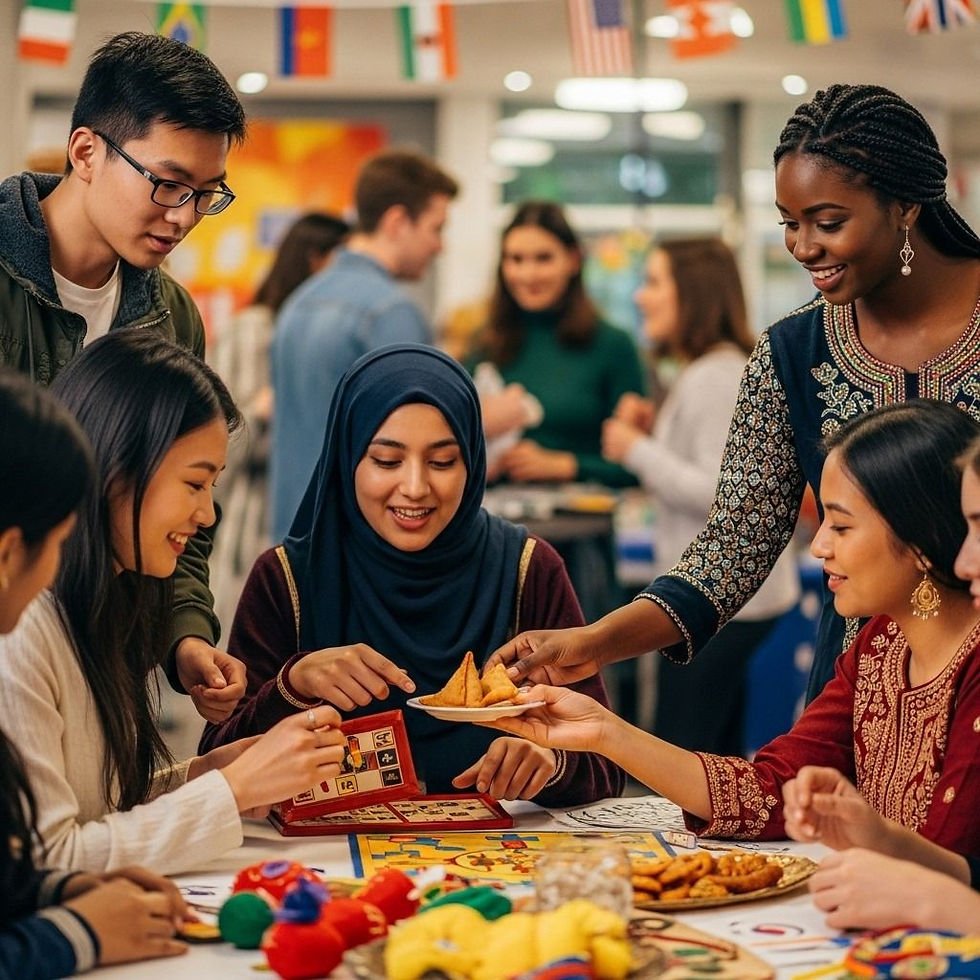
In a world shaped by globalization and constant connectivity, education is no longer confined within national borders. Today, learning extends beyond classrooms and textbooks, encompassing experiences that expose individuals to different cultures, perspectives, and ways of thinking. Intercultural learning has become a key element in preparing individuals to navigate diverse environments and contribute meaningfully to an increasingly interconnected society.
At its core, intercultural learning encourages individuals to step outside their comfort zones and engage with people from different cultural backgrounds. Through this process, learners begin to question assumptions, challenge stereotypes, and develop a deeper understanding of the world around them. These experiences foster open-mindedness and adaptability—qualities that are essential in both personal and professional contexts.
Beyond individual growth, intercultural learning plays a significant role in strengthening social cohesion. When people understand and respect cultural differences, they are more likely to engage in constructive dialogue and collaboration. This reduces prejudice and promotes inclusion, helping to build communities where diversity is seen as an asset rather than a challenge. In this sense, intercultural education contributes not only to personal development but also to more harmonious and resilient societies.
Programs such as international exchanges, mobility projects, and collaborative initiatives provide practical opportunities for intercultural learning. Participants gain firsthand experience of different traditions, languages, and social norms, which enhances their communication skills and cultural awareness. These experiences often have a lasting impact, shaping individuals into more confident, empathetic, and globally minded citizens.
Ultimately, education beyond borders is about more than acquiring knowledge—it is about building connections and fostering mutual understanding. By embracing intercultural learning, individuals are better equipped to face global challenges, work across differences, and contribute to a more inclusive and cooperative world.


